
DE, USA, 19958
Explore the Family & Kids Rafts collection from Inflatable Islands Co. for safe, exciting, and versatile waterfront fun for people of all ages
Shipping/Handling: Additional charges apply.
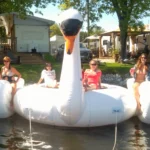
Shipping/Handling: Additional charges apply.
Shipping/Handling: Additional charges apply.
Shipping/Handling: Additional charges apply.
Email: peter@inflatable-island.com | Toll-Free: 1-800-410-4291
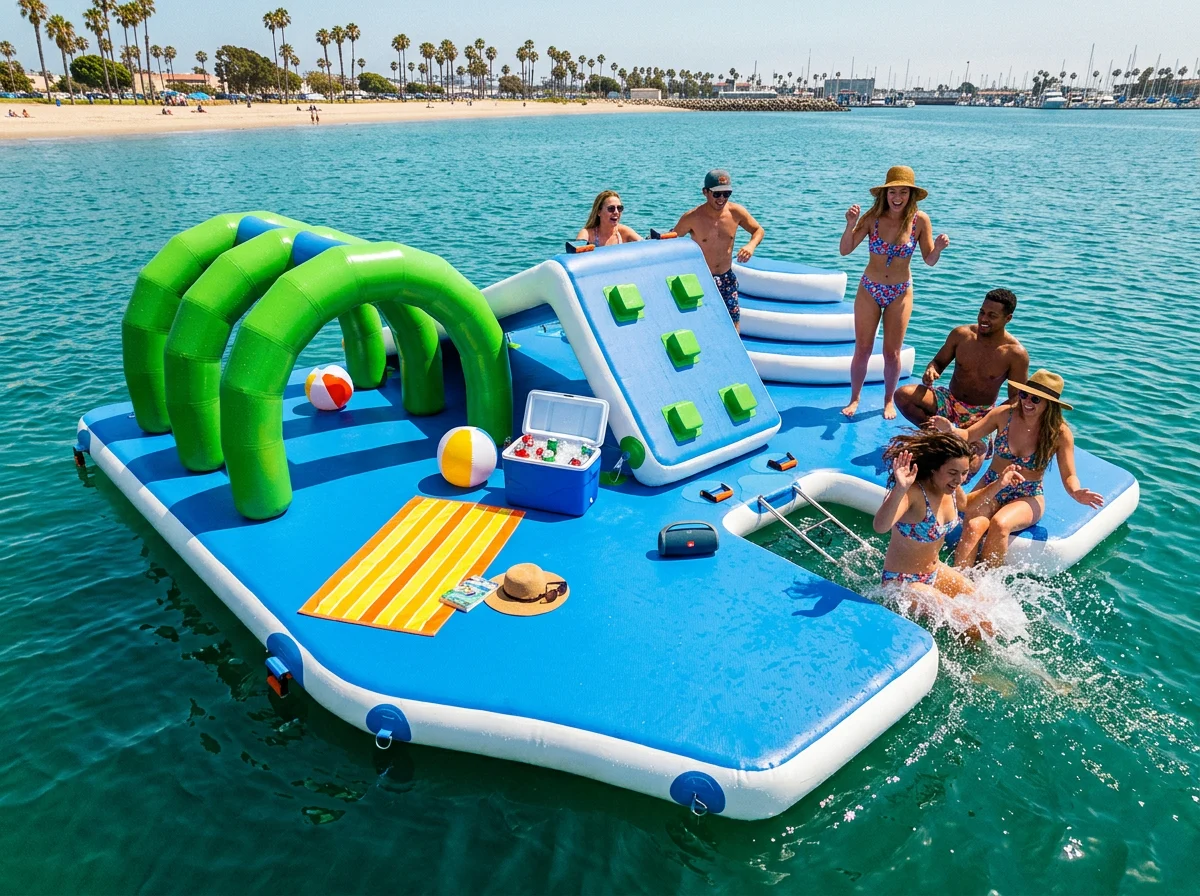
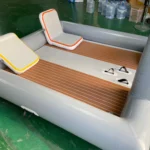
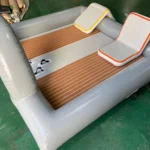
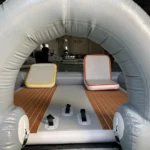
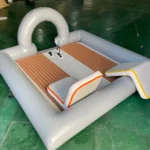
Not all inflatable rafts sit the same way on the water, and the difference comes down to the floor. I-beam floors, built with internal creases running every few inches, track straight and true — ideal when you want the raft to hold a line toward a swim platform or shallow cove. Drop-stitch floors use tens of thousands of polyester fibers pulled taut between the top and bottom layers, creating a flat, rock-hard deck that lets adults walk and kids jump without the sagging, bouncy feel of cheaper models. A water-ballast floor adds a second chamber that fills with water for extra stability, at the cost of a more sluggish ride. For a family raft, a drop-stitch deck is the stand-out choice: it stays dry underfoot, spreads weight evenly, and gives young children a stable surface to stand and play on while the whole platform remains level.
The material a raft is welded from determines how many summers it survives. Commercial-grade PVC, typically 0.9mm or thicker, is the workhorse of family rafts — it is heat-welded at the seams rather than glued, resists abrasion and oil, and is easy to patch at home with a marine patch kit. Hypalon is a softer synthetic rubber that is even more UV- and cold-resistant, lasts the longest of the three common materials, and is simpler to field-repair, which is why commercial outfitters still run 20-year-old Hypalon boats. Polyurethane is the stiffest and most puncture-resistant, but it is harder to repair on your own. The rule for a family raft that lives on a sunny dock: demand UV inhibitors baked into the material matrix, because unreinforced plastic degrades in as little as 90 days of direct sun, turning brittle and leaking at the seams.
Two design numbers quietly dictate how a raft behaves. Tube diameter — the width of the side tubes — controls stability and comfort. A larger-diameter tube (around 18 to 22 inches) makes the raft more stable and more comfortable to sit in for long stretches, though it reduces interior space and can be harder for a small child to climb back into from the water. Rocker is the upward lift at the bow and stern. More rocker lets the raft roll over gentle waves instead of pushing through them, keeping the ride calm and dry — exactly what you want when a wake rolls through a family cove. A balanced raft pairs a stable tube diameter with moderate rocker so it tracks predictably while staying gentle for younger passengers.
Getting the raft onto the water is half the job. Inflate drop-stitch sections to their rated pressure (typically 10 to 15 PSI) with a high-volume electric pump — a hand pump cannot reach the threshold needed for a rigid deck. Anchor to match your environment: a 15-pound fluke or grapnel anchor with at least 50 feet of nylon line for deeper water, or a 5-pound mushroom anchor or sand-filled bag for a shallow sandbar. Keep a 3-to-1 rope-to-depth ratio so the anchor doesn’t lift on a passing wake. Spread the family across the deck rather than clustering on one edge, and always use the reinforced grab handles when boarding from the water. Rinse the raft with fresh water and a mild biodegradable soap after each outing, and store it fully dry — trapped moisture is the leading cause of mold and seam degradation over the winter.
Yes — that is precisely what a drop-stitch floor is engineered to do. The internal polyester threads pull taut at 10 to 15 PSI to create a rigid deck that spreads weight evenly, so an adult can stand or walk while children bounce elsewhere on the platform without the deck dipping or folding. Keep the total load within the raft’s rated capacity (typically 1,500 to 2,500 pounds) and spread the weight across the deck rather than clustering on one edge to maintain level buoyancy.
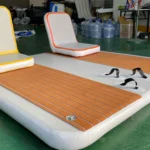
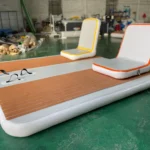
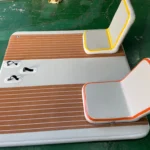
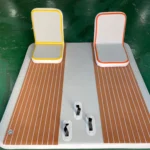
An I-beam floor has internal creases every few inches running the length of the raft, which makes it track straight and hold a heading well — useful if you anchor and want the raft to stay pointed a certain way. A drop-stitch floor is completely flat, with no creases, so it is drier to stand on and more stable for young children, but it does not track as straight and drifts more easily in a current so we have added four rudder fins underneath to keep it straight. For a family raft where kids stand, play, and board from the water, a drop-stitch deck is lower to the water surface and the safer, more comfortable choice.
Hypalon is the better material for heavy river rafting uses. It is a softer synthetic rubber that resists bumping and scrapping and cold-cracking on those cold days, all better than PVC, and therefore lasts the longest of the common raft materials, and is easier to patch in the field — which is why commercial outfitters still use 20-year-old Hypalon rafts. PVC is more affordable for leisure uses and perfectly fine for lake gentle rivers usage. Whichever you choose, rinse the raft with fresh water and apply a UV-protectant spray twice a season to extend its life.
Follow the pressure rating printed on the raft: drop-stitch decks typically need 10 to 15 PSI to stay rigid, while softer lounge sections run closer to 3 PSI. Overinflating is a real risk — it stresses the seams and can cause delamination or a blowout at the weld in direct sun, when trapped air expands. Use a pump with a pressure gauge and check ratings in the morning, before the sun raises internal pressure, to keep seams healthy season after season.
Match the anchor to the depth. In shallow sandbar water, a 5-pound mushroom anchor or a sand-filled anchor bag is enough to hold the raft in waist-deep water. In deeper lake water, use a 15-pound fluke or grapnel anchor with at least 50 feet of nylon line, and keep a 3-to-1 rope-to-depth ratio so the anchor doesn’t lift on a passing wake. For windy days, go to a two-point anchoring system to keep the raft from swinging toward swimmers or the shoreline.